Begin with an answer you can check
A fluent answer can sound complete before anyone has checked the records behind it. In a fleet software demonstration, start with one operational question and agree what would count as a supported answer. For example, ask which of two demonstration vehicles recorded more stopped time during a named shift. Define stopped time first; it is not automatically engine idling, a delivery delay or wasted time.
Ask the presenter to show the selected vehicles, reporting dates, time zone and source record. Record the question and the answer beside that reference. You are testing whether your reviewer can reproduce the result from the evidence available in the proposed workflow, rather than whether the assistant produces a convincing paragraph.
Check the scope before the conclusion
A useful answer needs the same scope as the question. Verify the vehicle reference, period boundaries, units and filters in the underlying report. If the question concerns a shift crossing midnight, agree which local dates and time zone define that shift. If a summary covers the whole vehicle group instead of the requested vehicles, correct the scope before judging the answer.
Keep the distinction between a record and an interpretation visible. A recorded stop can support a statement about observed stopped time under the report’s definition. It does not by itself establish why the vehicle stopped, whether a delivery was late or who was responsible. Ask which additional evidence would be needed for that conclusion.
Reproduce one calculation and one missing-data case
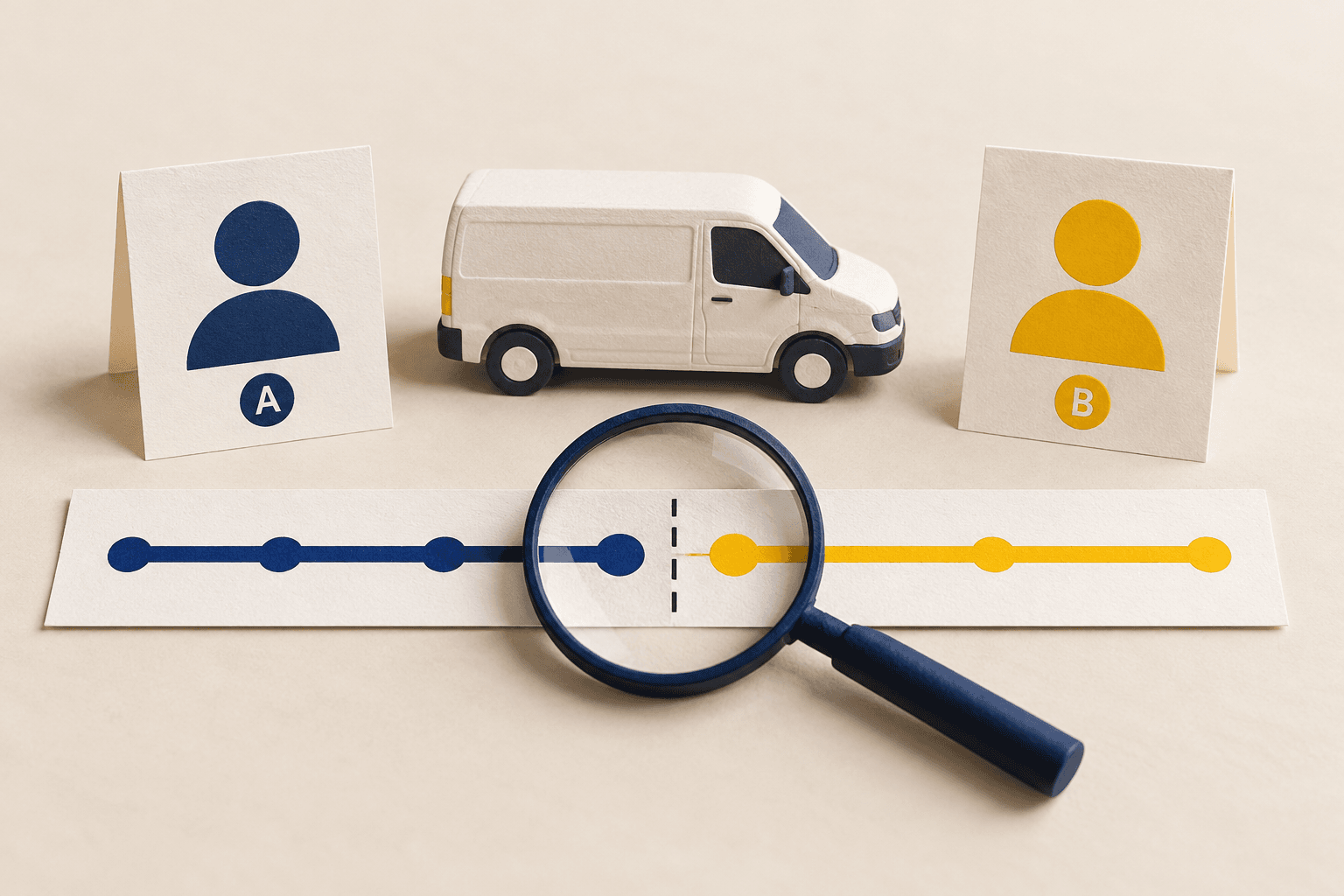
Use a small fictional example in the demo: Vehicle A has two observed stop records of 10 and 15 minutes; Vehicle B has one observed stop record of 20 minutes. With that declared scope, the recorded totals are 25 and 20 minutes. Ask the presenter to open the individual records and reproduce the total, including any rules for overlapping intervals or excluded observations. This arithmetic is a fictional example, not a customer result or a SafarTrak performance claim.
Then ask what happens if part of Vehicle B’s shift has no usable observations. The available 20 minutes does not establish its complete shift total. Have the presenter identify the gap and explain whether the answer can be limited to observed records or must remain unresolved. Do not accept an invented zero for a missing interval.
NIST’s Generative AI Profile describes the risk of confidently presented false outputs, including unsupported reasoning or citations. That is a reason to check the source itself. A source label, a link or an explanation in the answer is not sufficient evidence until the reviewer can open and reconcile the relevant record.
Separate answering from taking action
Agree whether the demonstration is read-only or includes a proposed action. Reading a report, drafting a recommendation and changing an operational record are separate capabilities. If you need an action workflow, ask the provider to show its permitted scope, approval step, responsible person and resulting record in an approved demonstration environment. Do not assume any of these controls exist from an assistant’s wording.
Use a non-sensitive sample question with the access level your intended reviewer will have. Confirm which records are available to that person, what stays outside the answer and how an unsupported question is handled. The existing report-access article covers recipient and access checks; this protocol adds a different test: whether a particular answer is supported by the records that reviewer is entitled to inspect.
Record demonstrated evidence and unresolved requirements
Use the blank answer-review sheet to capture the question, vehicle scope, period, source reference, calculation, missing observations, demonstrated result and reviewer. Mark each requirement demonstrated, unsupported or unresolved. A requirement should remain open when the relevant source cannot be shown; a polished demonstration should not erase that limitation.
SafarTrak’s public platform page describes Rahi as a website assistant for questions about SafarTrak, supported devices and next steps. It directs fleet AI evaluation to a guided platform demo where the available questions, data and workflows must be confirmed. Website assistance does not establish live conversational access to fleet records, autonomous actions, an external agent connection or a particular integration.
Bring one operational question to the platform demo and use the buyer evaluation kit for the wider vehicle, workflow and commercial review. Keep private driver information, customer locations and real operating files within your organisation’s approved controls. Agree who reviews an answer before it influences a fleet decision, and retain the evidence reference alongside any unresolved question.
Sources and further reading
This is a buyer demonstration protocol, not a claim that SafarTrak offers a live fleet conversational assistant or automated actions. The arithmetic example is fictional. Use approved demonstration data and confirm the proposed product scope.
BRING IT TO YOUR FLEET
Start with your vehicles.
Ask the right questions.
Share your vehicle mix, existing devices and required signals with the SafarTrak team.
Discuss the available fleet AI demonstrationDiscuss your deployment