What diesel now costs Nigerian fleets
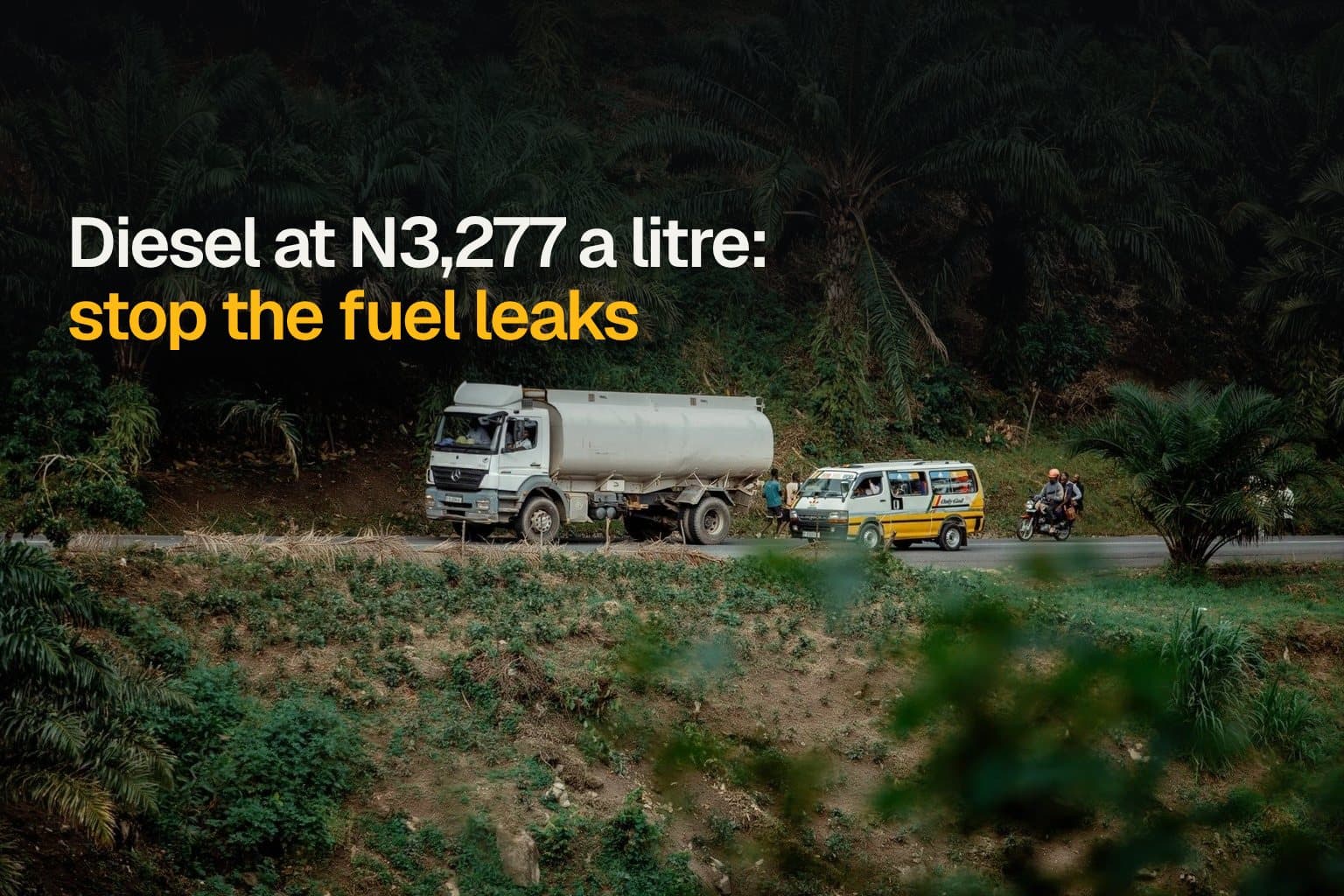
Diesel has become the biggest single swing in Nigerian haulage costs. The NBS reported an average diesel price of ₦3,277.47 a litre in May 2026, up 86.4% on a year earlier and 32% on April. A year before, in November 2025, the NBS average had been ₦1,409.61. UNCTAD's 2026 Trade and Development Report found Nigeria had the world's highest diesel price increase between February and August 2026, at 82.7%.
Prices have eased and spiked again since, with refinery and import costs moving week to week. Whatever the pump price, every litre lost to theft, idling or poor routing now costs a fleet far more than it did last year.
Where fleet diesel goes missing
Losses usually come from a few places: fuel siphoned from tanks at night stops or parks, inflated fuel receipts and fill-ups that never reach the tank, long idling in port queues and traffic, unauthorised trips, and routes longer than they need to be. Each is hard to see from fuel bills alone, because the bill only shows what was paid, not where it went.
How tracking and fuel monitoring help
A GPS tracker shows every trip, stop and idling period, so you can match fuel spent against distance driven per truck and spot trips no one authorised. Adding a fuel level sensor shows fills and sudden drops with time and location, which turns a vague suspicion of siphoning into a dated event you can act on.
Start with the trucks that use the most fuel. Set alerts for fuel drops, long idling and night movement, and compare each truck's litres per 100 km week by week. Drivers who know fuel is measured tend to change behaviour quickly, which is often where the first savings come from.
Budgeting for it
Ask suppliers for a written quote per truck covering the tracker, fuel sensor, installation, SIM and data, and the software plan, and compare it against your monthly diesel bill. At current prices, even a small cut in litres lost per truck can pay for the system quickly; check the numbers against your own fuel records rather than a supplier's promises.
Frequently asked questions
How much is diesel in Nigeria in 2026?
The NBS reported an average of ₦3,277.47 a litre in May 2026. Prices change often, so check the latest NBS Diesel Price Watch or your supplier.
How can a fleet detect diesel theft?
Combine GPS trip data with fuel level sensors and alerts for sudden fuel drops, long idling and unauthorised movement, then compare litres per 100 km per truck.
Does GPS tracking reduce fuel costs?
It shows idling, detours and unauthorised trips that waste fuel, and with a fuel sensor it records fills and drops. Savings depend on acting on that data.
What should a fuel monitoring quote include?
Tracker, fuel sensor, installation and calibration, SIM and data, software plan and support, priced per truck.
Sources and further reading
Diesel price figures are from the National Bureau of Statistics (NBS) Diesel Price Watch as reported by Legit.ng and Nairametrics, and UNCTAD's Trade and Development Report 2026 as reported by Leadership. Prices change weekly; the fuel-control steps are general fleet practice, not legal requirements.
- Legit.ng: NBS says diesel price rose 86.40% to ₦3,277 a litre in May 2026
- Nairametrics: Diesel price at ₦1,409.61 in November 2025 (NBS)
- Leadership: Nigeria recorded world's highest diesel price increase (UNCTAD, October 2026)
- SafarTrak: Lagos Eto e-call-up for trucks
- SafarTrak: Sudden fuel drop: what to check
Sources checked on . Written and reviewed by Yash Verma, Founder & CEO, SafarTrak. How we write · Suggest a correction
BRING IT TO YOUR FLEET
Start with your vehicles.
Ask the right questions.
Share your vehicle mix, existing devices and required signals with the SafarTrak team.
See how SafarTrak tracks a fleetDiscuss your deployment