Who needs approval
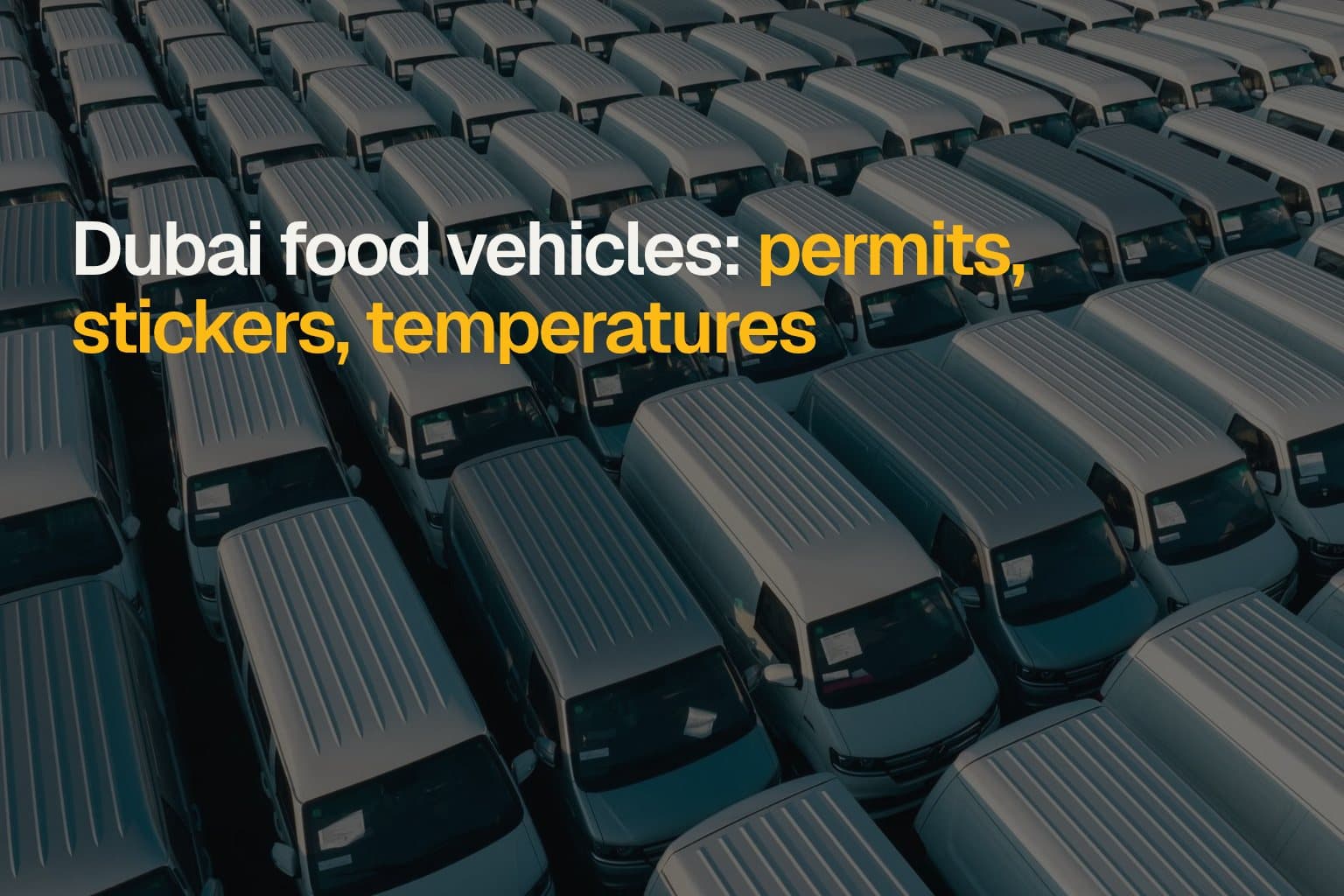
Vehicles that carry food in Dubai need approval from Dubai Municipality's food safety department before they can be licensed for that use by the Roads and Transport Authority (RTA). Dubai Municipality introduced its food vehicle permit system in 2007, and since 2011 vehicle testing centres under the RTA have inspected food vehicles on the municipality's behalf and issued permits that show whether a vehicle is suitable for chilled, frozen or dry food.
The rules apply to any vehicle carrying food through Dubai, including vehicles from other emirates and neighbouring countries.
Colour-coded stickers
Approved vehicles display a sticker for the type of food they carry: green for refrigerated (chilled) food, orange for frozen, red for hot food and yellow for dry goods. Inspectors use the sticker to check that a vehicle is carrying only the food it was approved for, and food establishments can check a vehicle's approval on Dubai Municipality's Foodwatch platform before accepting a delivery.
Temperatures to hold
The Dubai Food Code sets the safe holding temperatures: cold food at 5°C or colder and hot food at 60°C or hotter. Frozen food is normally held at -18°C or colder. Your vehicle's refrigeration has to hold the range for its permit category on the hottest days, with the doors opening at every drop.
Dubai Municipality has run joint inspection drives with the RTA and Dubai Police; in one, a third of the 1,100 food vehicles inspected were fined.
Keeping proof on every trip
A thermometer reading at the inspection shows only that moment. A temperature sensor in the cargo box linked to a GPS tracker records temperature, location and door openings for the whole route, so you can show a customer or inspector that the load stayed in range, and see which driver or stop caused an excursion.
Set alerts for out-of-range temperature and long door openings, and keep trip reports with delivery records. For pharmaceutical deliveries, Good Distribution Practice requirements from MOHAP or DHA apply on top of food rules.
Frequently asked questions
Do food delivery vehicles in Dubai need a permit?
Yes. Vehicles carrying food need Dubai Municipality approval, granted after inspection at an authorised vehicle testing centre, before the RTA licenses them for that use.
What do the food vehicle sticker colours mean in Dubai?
Green for refrigerated food, orange for frozen, red for hot food and yellow for dry food.
What temperature must chilled food be kept at in Dubai?
The Dubai Food Code requires cold high-risk food at 5°C or colder and hot food at 60°C or hotter. Frozen food is normally kept at -18°C or colder.
Do the rules apply to trucks from other emirates?
Yes. Vehicles from other emirates or neighbouring countries that carry food through Dubai must follow the same rules.
Sources and further reading
Based on Dubai Municipality guideline DM-FSD-GU63 (Requirements for food transportation and delivery vehicles), Dubai Municipality circulars and Foodwatch guidance, and reports in Gulf News, Khaleej Times and Emirates 24/7. Check the current guideline and permit fees with Dubai Municipality before applying.
- Dubai Municipality: DM-FSD-GU63 Requirements for food transportation and delivery vehicles
- Dubai Municipality: circular on food delivery and transport (Food Code temperatures)
- Dubai Municipality: Foodwatch FAQs
- Khaleej Times: DM approval must for transporting foodstuff
- MENAFN: Food transport vehicles under scanner in Dubai
- Gulf News: Dubai enhances measures to check vehicles transporting food
Sources checked on . Written and reviewed by Yash Verma, Founder & CEO, SafarTrak. How we write · Suggest a correction
BRING IT TO YOUR FLEET
Start with your vehicles.
Ask the right questions.
Share your vehicle mix, existing devices and required signals with the SafarTrak team.
See SafarTrak cold-chain monitoringDiscuss your deployment