Who must fit a speed limiter
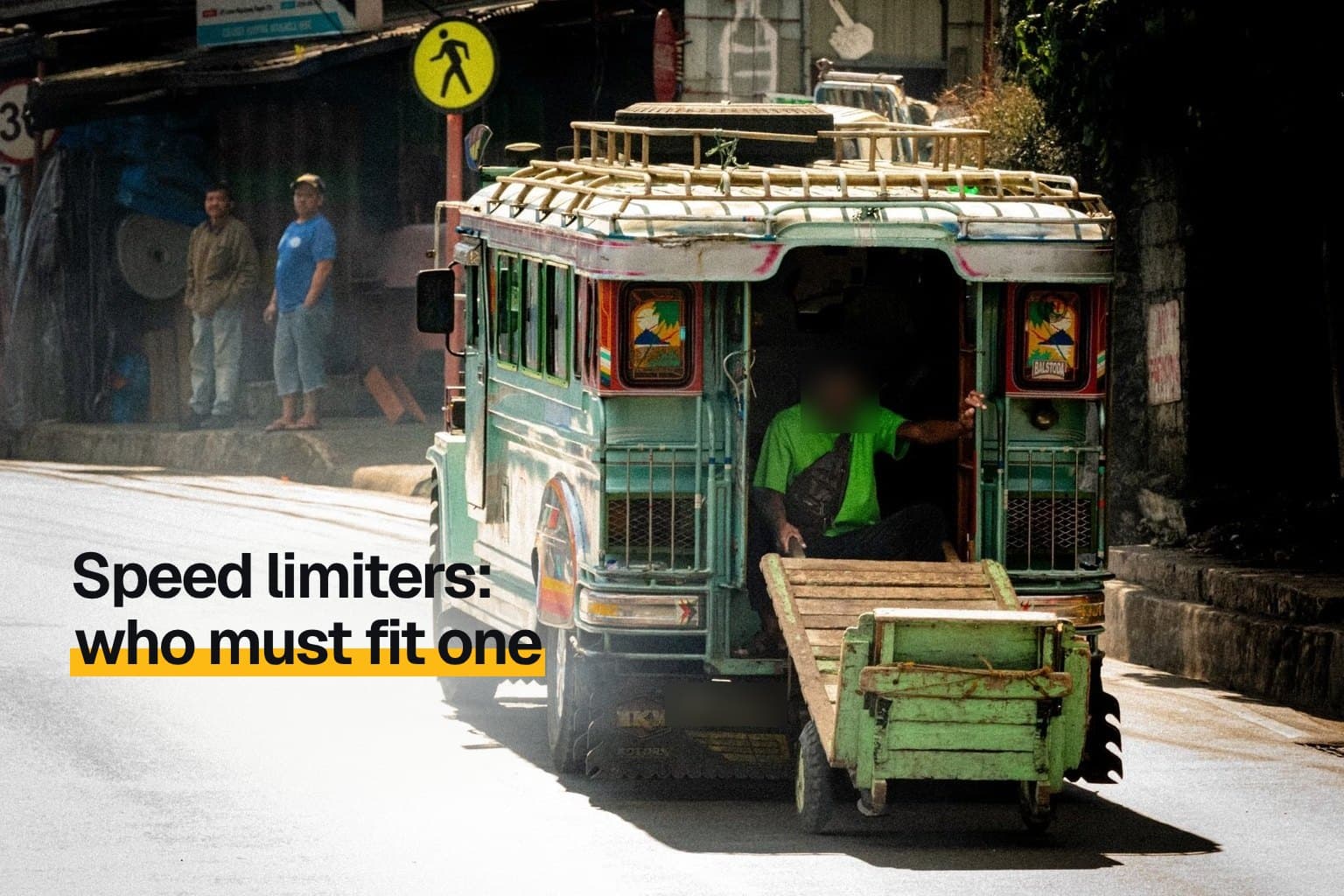
Republic Act 10916, the Road Speed Limiter Act of 2016, says covered vehicles may not run on any road in the Philippines without a standard speed limiter that meets the specifications approved by the transport department. Its implementing rules cover public utility vehicles and vehicles such as closed vans, haulers, cargo trucks, shuttle services and tanker trucks. AutoIndustriya reported that taxis and public utility jeepneys are excluded.
The LTO and LTFRB are meant to supervise and seal the setting of each limiter to the maximum speed allowed on the vehicle's route, and the law bars the LTO from registering, and the LTFRB from franchising, a covered vehicle without one.
The cost of not complying
The law sets a ₱50,000 fine for operating a covered vehicle without a speed limiter, and the same fine for a driver, owner or operator who runs a vehicle with a limiter that does not work or has been tampered with. For most operators that fine is far higher than the device itself, which is why the budget question is about when, not whether.
What a speed limiter costs
We could not find a current official or published market price for RA 10916-compliant limiters. Older reports give a rough sense of scale only: in an older report, suppliers cited by motoring journalist James Deakin quoted about US$180 to US$400 per unit, and one supplier in 2016 offered packages with no recurring cost and a 3-year or 150,000 km warranty. Prices since then will differ.
For a budget, ask accredited suppliers for a written quote per vehicle covering the device, installation, calibration to your route's limit, sealing and inspection support, any software or data fee, and warranty. Ask whether the device also records or transmits speed data, because a limiter that doubles as a tracker can replace a separate GPS unit on some vehicles.
How GPS tracking helps before and after
While implementation rules are being finalised, many operators already use GPS tracking to see speeding by vehicle and driver. That data helps you set realistic route limits, coach drivers, and later show that a limiter is working, since tampering carries the same ₱50,000 fine as having no limiter at all.
Frequently asked questions
How much is the fine for no speed limiter in the Philippines?
₱50,000 under RA 10916, and the same fine applies to running a vehicle with a non-working or tampered limiter.
Which vehicles need a speed limiter?
Public utility vehicles and vehicles such as closed vans, haulers, cargo trucks, shuttle services and tanker trucks. Taxis and public utility jeepneys were reported as excluded.
How much does a speed limiter cost in the Philippines?
There is no current official price. Older reports cited about US$180 to US$400 per unit; get written quotes from accredited suppliers for today's prices.
Who sets and seals the speed limiter?
The LTO or LTFRB supervises the setting to the maximum allowed on the vehicle's route and seals it after inspection.
Sources and further reading
Based on the text of Republic Act 10916 (Senate Legislative Digital Resources and the Supreme Court e-Library), its implementing rules, and reporting by AutoIndustriya, Rappler and James Deakin. Device prices quoted in the media are several years old and are shown only as historical reference; we found no current official price.
- Senate of the Philippines: Republic Act 10916 (Road Speed Limiter Act of 2016)
- Supreme Court e-Library: RA 10916 text
- AutoIndustriya: Government readies Speed Limiter Act implementation, up to ₱50K fine
- James Deakin: Bus companies start installing speed limiters
- AutoIndustriya: Autokontrol launches speed limiters (2016)
Sources checked on . Written and reviewed by Yash Verma, Founder & CEO, SafarTrak. How we write · Suggest a correction
BRING IT TO YOUR FLEET
Start with your vehicles.
Ask the right questions.
Share your vehicle mix, existing devices and required signals with the SafarTrak team.
See how SafarTrak tracks a fleetDiscuss your deployment