What FSSAI announced
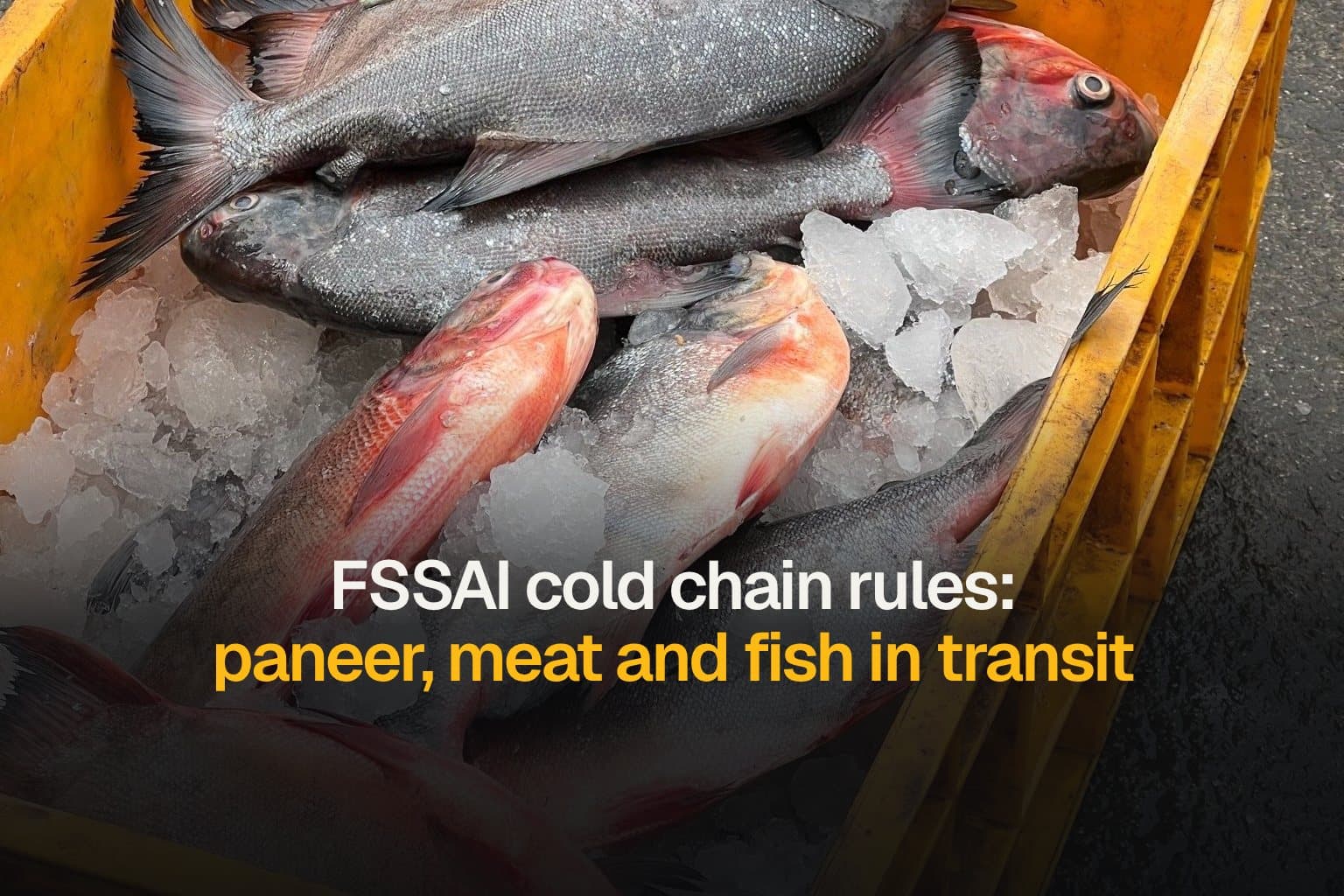
On 18 October 2026 the Food Safety and Standards Authority of India (FSSAI) issued an advisory on handling, storing and transporting perishable foods such as khoa, paneer, meat and fish under controlled temperature. It says food businesses must hold the prescribed temperature through the whole supply chain, from sourcing to delivery to the end consumer, under Schedule 4 of the Food Safety and Standards (Licensing and Registration of Food Businesses) Regulations, 2011.
FSSAI asked state food safety commissioners, Indian Railways and its regional directors to have licensing authorities and food safety officers keep strict watch during inspections and transport checks. Non-compliant food can be seized and destroyed.
What transporters must do
The advisory lists the basics: carry these foods only in clean, covered vehicles suitable for food, keep the prescribed temperature during storage and transport, use food-grade and suitable secondary packaging, and protect loads from dust, moisture, pests and cross-contamination during loading and unloading. It also asks for records and traceability for each consignment, with invoices or other documents available.
FSSAI's transport audit checklist adds that vehicles carrying chilled or frozen food should be able to reach and hold the required temperature and be designed so the temperature can be checked from outside.
Which temperatures to work to
The advisory refers to the prescribed temperature for each product rather than giving numbers. FSSAI's hygiene checklist for food businesses uses 5°C or below for cold food and -18°C for frozen food in transport, and hot food at 65°C. Check the specific standard for your product and your customer's specification, and write the range on the consignment documents.
Proving the cold chain held
When a food safety officer or a customer questions a load, a reading taken at the dock is weak evidence. A temperature sensor in the reefer body, linked to a GPS tracker, records the temperature through the whole trip with time and location, so you can show what happened between the warehouse and the customer and pinpoint where an excursion began, for example a long halt with the door open.
Set alerts for temperature going out of range and for door openings outside delivery points, and keep the trip reports with your consignment records. That turns the traceability the advisory asks for into a report you can hand over.
Frequently asked questions
What did FSSAI's October 2026 advisory say?
Food businesses must handle, store and transport perishable foods such as khoa, paneer, meat and fish at the prescribed temperature from sourcing to delivery, under Schedule 4 of the FSS Licensing and Registration Regulations, 2011.
Does the advisory apply to transporters?
Yes. It covers storage and transport, asks for suitable clean vehicles and records for each consignment, and directs food safety officers and Indian Railways to check transport.
What temperature should chilled food be transported at in India?
FSSAI's hygiene checklist uses 5°C or below for cold food and -18°C for frozen food. Check the standard for your specific product.
How can a transporter prove temperature was maintained?
Use a temperature sensor in the reefer linked to a GPS tracker, which records time, location and temperature for the whole trip.
Sources and further reading
Based on FSSAI's advisory of 18 October 2026 as reported by Business Today, Deccan Chronicle and Maritime Gateway, Schedule 4 of the Food Safety and Standards (Licensing and Registration of Food Businesses) Regulations, 2011, and FSSAI's transport audit checklist. The advisory itself does not list temperatures; the figures here come from FSSAI's published hygiene checklist and should be checked against the standard for your product.
- Business Today: FSSAI tightens checks on how paneer, meat, fish and khoa reach consumers (18 October 2026)
- Maritime Gateway: FSSAI directs strict temperature control for perishable foods in storage and transport
- FSSAI: Transport audit checklist (RCD Transport)
- FSSAI: Hygiene rating sample checklist
- SafarTrak: Cold chain temperature monitoring
Sources checked on . Written and reviewed by Yash Verma, Founder & CEO, SafarTrak. How we write · Suggest a correction
BRING IT TO YOUR FLEET
Start with your vehicles.
Ask the right questions.
Share your vehicle mix, existing devices and required signals with the SafarTrak team.
See SafarTrak cold-chain monitoringDiscuss your deployment